



Serotonin Transporter
5-HTT; SERT; SLC6A4
Serotonin Transporters (SERTs) are integral membrane proteins that transport serotonin from synaptic spaces into presynaptic neurons. SERTs function by reuptaking serotonin in the synaptic cleft, effectively terminating the function of serotonin and halting neuronal transmission. Serotonin reuptake is a critical process to prevent overstimulation of nerves.
Serotonin transporter (SERT) regulates extracellular levels of serotonin (5-hydroxytryptamine, 5HT) in the brain by transporting 5HT into neurons and glial cells. The human SERT (hSERT) is the primary target for drugs used in the treatment of emotional disorders, including depression. hSERT belongs to the solute carrier 6 family that includes a bacterial leucine transporter (LeuT), for which a high resolution crystal structure has become available.
All Product Categories
-
Serotonin Transporter Inhibitors
(250)
View all products
-
Serotonin Transporter Agonists
(2)
View all products
-
Serotonin Transporter Antagonists
(7)
View all products
-
Serotonin Transporter Activators
(4)
View all products
-
Serotonin Transporter Modulators
(5)
View all products
-
Serotonin Transporter Controls
(4)
View all products
-
Serotonin Transporter Substrates
(2)
View all products
-
Serotonin Transporter Ligands
(3)
View all products
-
Serotonin Transporter Related Products (304)
Related Products (304)

-
Antibodies (3)
-
rel-Paroxetine-d4 hydrochloride
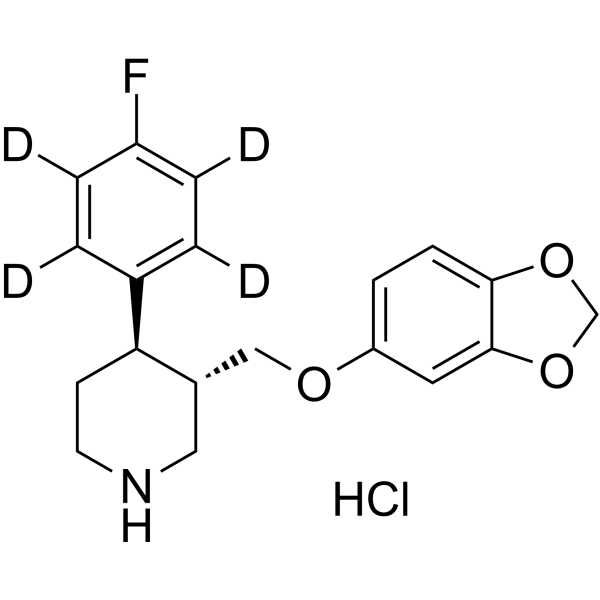 0 ImagesCat. No.: HY-151216SCAS No.: 1217683-35-6Synonyms: rel-BRL29060-d4 hydrochloride; rel-BRL29060A-d4rel-Paroxetine-d4 (rel-BRL29060-d4) hydrochloride is an isotope-labeled rel-Paroxetine hydrochloride.
-
Levomilnacipran-d5 hydrochloride
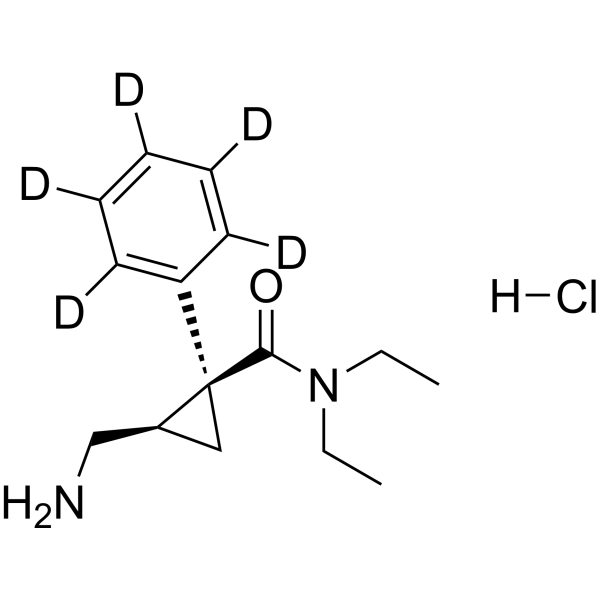 0 ImagesCat. No.: HY-B0168BSSynonyms: (1S,2R)-Milnacipran-d5 hydrochloride; F-2695-d5 hydrochlorideLevomilnacipran-d5 ((1S,2R)-Milnacipran-d5) hydrochloride is deuterium labeled Levomilnacipran hydrochloride (HY-B0168B). Levomilnacipran ((1S,2R)-Milnacipran) hydrochloride is the enantiomer of Milnacipran (HY-B0168) and a strong substrate of P-gp that can cross the blood-brain barrier. Levomilnacipran hydrochloride is a serotonin and norepinephrine reuptake inhibitor, with IC50 values of 10.5 nM and 19.0 nM, and Ki values of 92.2 nM and 1.2 nM for human norepinephrine transporter (NET) and serotonin transporter (SERT), respectively. Levomilnacipran hydrochloride has antidepressant and anxiolytic activities. Levomilnacipran hydrochloride can be used for the research of depression.
-
Dextromilnacipran-d6
 0 ImagesCat. No.: HY-14794SCAS No.: 1127352-73-1Synonyms: (1R,2S)-Milnacipran-d6; F2696-d6Dextromilnacipran-d6 is the deuterium labeled Dextromilnacipran (HY-14794). Dextromilnacipran ((1R,2S)-Milnacipran; F2696) is an orally active Serotonin (HY-B1473A)/Noradrenaline (HY-13715) transporter inhibitor. Dextromilnacipran inhibits Serotonin and Noradrenaline reuptake. Dextromilnacipran can be used for the research of depression, fibromyalgia.
-
(S)-Alaproclate hydrochloride
 0 ImagesCat. No.: HY-124779ACAS No.: 57469-92-8Synonyms: (S)-GEA 654 hydrochloride; (S)-A03 hydrochloride(S)-Alaproclate ((S)-A03) hydrochloride is a potent selective serotonin reuptake inhibitor (SSRI), which is used as an antidepressant agent. (S)-Alaproclate (hydrochloride) also produces a potent block of N-methyl-d-aspartate (NMDA) receptor currents in hippocampal neurons (IC50=1.1 μM) with a potent blocker of K+ currents.
-
(R)-Duloxetine hydrochloride
 0 ImagesCat. No.: HY-B0161DCAS No.: 910138-96-4Synonyms: LY248686 hydrochloride(R)-Duloxetine (LY248686) Hydrochloride is a napthalenyloxy-substituted amine utilized in binding studies with human serum albumin, and unlike its enantiomer (S)-Duloxetine, it exhibits limited efficacy as a dual serotonin and norepinephrine reuptake inhibitor (SNRI).
-
Tampramine fumarate
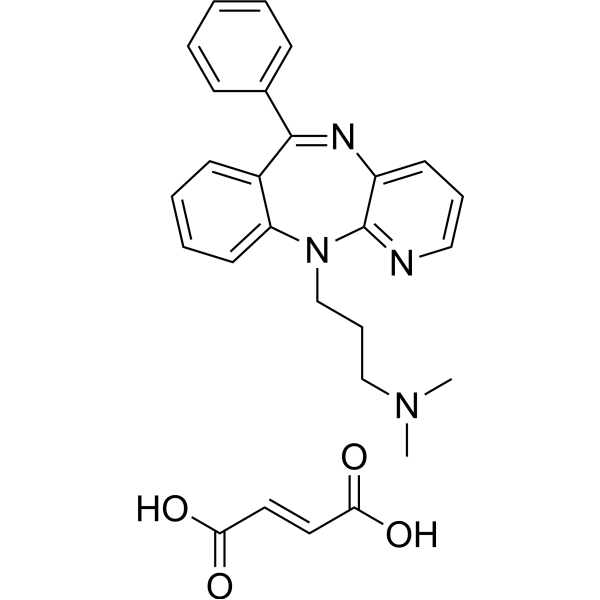 0 ImagesCat. No.: HY-129305CAS No.: 83166-18-1Synonyms: AHR-9377Tampramine fumarate is a potent, selective, noncompetitive NE reuptake inhibitor. Tampramine fumarate has antidepressant activity. Tampramine fumarate can be used in research of depression.
-
Nitroxazepine hydrochloride
 0 ImagesCat. No.: HY-101684ACAS No.: 16398-39-3Synonyms: CIBA 2330Go hydrochlorideNitroxazepine hydrochloride is a tricyclic antidepressant (TCA) for the study of depression. Nitroxazepine acts as a serotonin-norepinephrine reuptake inhibitor.
-
Fluvoxamine-d4 maleate
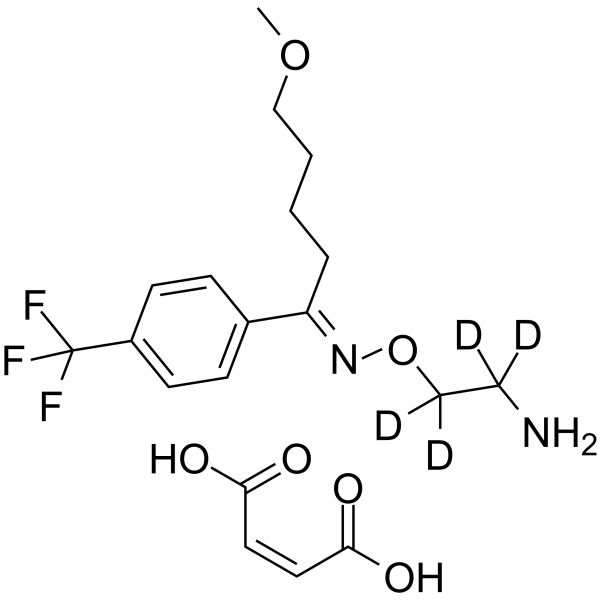 0 ImagesCat. No.: HY-B0103AS1Synonyms: DU-23000-d4 maleateFluvoxamine-d4 (maleate) is the deuterium labeled Fluvoxamine maleate. Fluvoxamine maleate (DU-23000 maleate) is an antidepressant which functions pharmacologically as a selective serotonin reuptake inhibitor.
-
(R)-Citalopram oxalate (Standard)
 0 ImagesCat. No.: HY-110289RCAS No.: 219861-53-7(R)-Citalopram oxalate (Standard) is the analytical standard of (R)-Citalopram oxalate. This product is intended for research and analytical applications. (R)-Citalopram oxalate, a R-(-) enantiomers of Citalopram (HY-121203), is a serotonin reuptake inhibitor. (R)-Citalopram oxalate is at least 20-fold weaker than S-citalopram (HY-14258) as inhibitor of the 5-HT transporter (SERT). (R)-Citalopram oxalate can be used for research of depression.
-
5-HT2A receptor agonist-13
 0 ImagesCat. No.: HY-1790635-HT2A receptor agonist-13 (Compound 28c) is a partial agonist of the 5-HT2A receptor, with an EC50 value of 416.9 nM and a Ki value of 113.9 nM. 5-HT2A receptor agonist-13 exhibits very weak agonistic activity towards the 5-HT2B receptor (EC50 = 120.2 nM), D2 receptor (Ki = 1298 nM), and has no activity towards the 5-HT2C receptor. 5-HT2A receptor agonist-13 exhibits weak inhibitory activity on the serotonin transporter (SERT) (EC50 = 977.2 nM). 5-HT2A receptor agonist-13 has antidepressant activity in mouse models and does not induce hallucinogenic behavior. 5-HT2A receptor agonist-13 can be used for the study of major depressive disorder (MDD) and treatment-resistant depression (TRD).
-
Citalopram-d3 hydrochloride
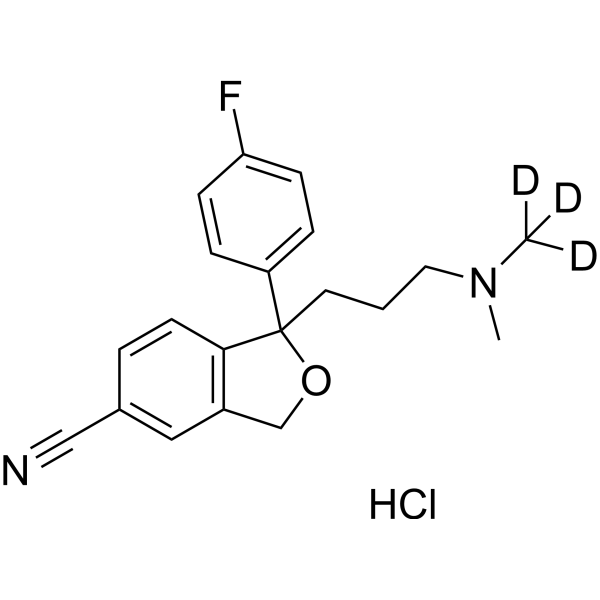 0 ImagesCat. No.: HY-121203S4Citalopram-d3 hydrochloride is deuterated labeled Citalopram (HY-121203). Citalopram is a racemate mixture of the active S(+)-enantiomer (Escitalopram; HY-14258) and R(-)-enantiomer. Citalopram is an orally active selective serotonin reuptake inhibitor (SSRI). Citalopram is an antidepressant and enhances serotoninergic neurotransmission.
-
Sercloremine hydrochloride
 0 ImagesCat. No.: HY-106041ACAS No.: 54403-20-2Synonyms: CGP 4718ASercloremine hydrochloride (CGP 4718A) is a selective and reversible MAO-A and 5-HT-uptake inhibitor. Sercloremine hydrochloride can be used in the research of depression.
-
(R,S)-MDDMA
 0 ImagesCat. No.: HY-186169B(R,S)-MDDMA is an MDMA analog that lacks the psychostimulant effects of its parent compound. (R,S)-MDDMA still retains partial serotonin-releasing activity.
-
UCD0820
 0 ImagesCat. No.: HY-175721UCD0820 is a Serotonin transporter (SERT) inhibitor that acts as a partial serotonin releasing agent (SRA). UCD0820 can be used for depression, addiction and post-traumatic stress disorder (PTSD) research.
-
Tesofensine-13C,d3
 0 ImagesCat. No.: HY-14472S1Synonyms: NS-2330-13C,d3Tesofensine-13C,d3 (NS-2330-13C,d3) is the deuterium and 13C-labeled Tesofensine (HY-14472). Tesofensine (NS-2330) is a triple monoamine reuptake inhibitor inducing a potent inhibition of the re-uptake process in the synaptic cleft of the neurotransmitters dopamine (DA; IC50=6.5 nM), norepinephrine (NE;IC50=1.7 nM), and serotonin (5-HT;IC50=11 nM), and with potentials as an anti-obesity agent. Tesofensine is a CNS acting anti-obesity agent.
-
(R)-Norfluoxetine
 0 ImagesCat. No.: HY-133171CAS No.: 130194-43-3(R)-Norfluoxetine is the (R)-enantiomer of Norfluoxetine (HY-135556). (R)-Norfluoxetine is a potent serotonin re-uptake inhibitor, with a Ki of 13 nM. (R)-Norfluoxetine can be used for the research of depression.
-
Dapoxetine
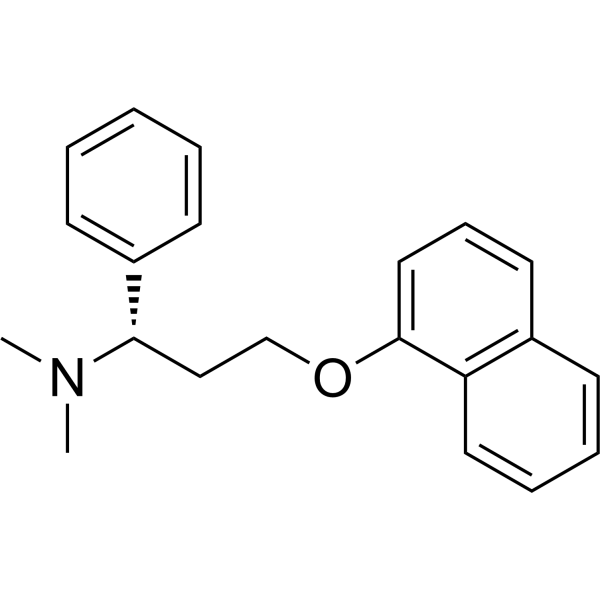 0 ImagesCat. No.: HY-B0304CAS No.: 119356-77-3Synonyms: (S)-(+)-Dapoxetine; LY-210448Dapoxetine (LY-210448) is an orally active and selective serotonin reuptake inhibitor (SSRI). Dapoxetine can be used for the research of premature ejaculation (PE).
-
RAGE/SERT-IN-1
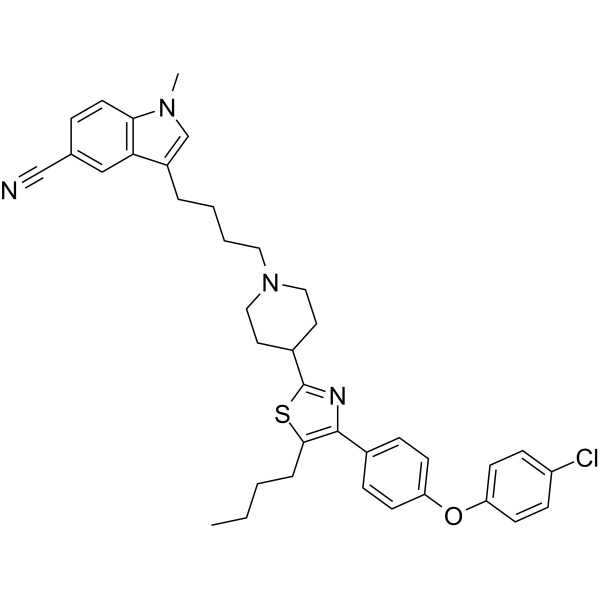 0 ImagesCat. No.: HY-146619CAS No.: 2766739-35-7RAGE/SERT-IN-1 is a potent and orally active advanced glycation end products (RAGE) and serotonin transporter (SERT) inhibitor with IC50s of 8.26 μM and 31.09 nM, respectively. RAGE/SERT-IN-1 exhibits significant neuroprotective effect against Aβ25-35-induced neuronal damage and alleviates depressive behavior of mice. RAGE/SERT-IN-1 can be used for researching the comorbidity of Alzheimer's disease and depression.
-
BMS-570520
 0 ImagesCat. No.: HY-182735CAS No.: 388101-58-4BMS-570520 is an orally bioavailable CCR3 antagonist with an IC50 of 1.9 nM against hCCR3 and an IC50 of 1300 nM against hCYP2D6. BMS-570520 inhibits CYP2D6, but shows low activity against off-target G protein-coupled receptors, biogenic amine transporters, and the hERG potassium channel. BMS-570520 regulates chemotaxis, calcium mobilization, and anti-inflammatory pathways. BMS-570520 can be used in research related to asthma, allergic rhinitis, and contact dermatitis.




